
It’s a November afternoon in 2006, and I’m ecstatic. I just got off the phone with a sales rep from the American Management Association (AMA). They want me to facilitate a week-long leadership seminar in Baltimore. The pay isn’t great, but a week of facilitation sounds good.
Then comes the big question:
“Can you send over the workbook, facilitator guide, and slides?”
“Um… actually, there are none. We haven’t built this program yet, but we have plenty of case studies you can use.”
And they did—straight from the Harvard Business Review. I’m already having second thoughts, but AMA knows I’m one of the few instructors who never says no. I’m also one of the few under 60, which, apparently, makes me “modern.”
“Could you put a program together for this?”
No mention of development pay. That tells me some salesperson got chewed out for selling this phantom course and is probably unemployed by now. But I’m the guy who never says no, so I agree.
The Week from Hell
Six weeks later, I’m at the training center near BWI airport. My audience: GS-15 government employees, the top of the civil service food chain. Every one of them is gunning for SES—Senior Executive Service—a highly competitive role that requires savvy politics. They’re looking to me for the “secret sauce” to get promoted.
They’re not happy.
During introductions, I sense outright contempt. Maybe it’s because I’m only 42, younger than everyone in the room. At the end of day one, a large man with a gray beard approaches me.
“What gives you the right to tell us how to become better leaders?” he sneers.
I’m floored. I don’t even remember what I said back, but I knew right then this week would be brutal.
Day two, I pull out my best material, hand out case studies, and have them read and report back. It helps fill time, but I’m running out of content fast.
By the end of the day, Gray Beard says, “You did better today.”
I don’t take it as a compliment.
Then I get an idea. Down the hall, there’s a three-day orientation for newly promoted SES leaders. I invite a couple of them to speak to my group. They’re happy to. Between that and the case studies, I stretch the week. Whatever’s left, I wing.
By Friday, I’m exhausted, mentally fried, and slightly traumatized.
The Recession Hits
Fast forward to 2008. The Great Recession guts the economy, and most of my work shifts to outplacement. AMA is still operating but barely. They’re desperate to fill programs, so they call me for a three-day management skills workshop at their Northern Virginia center.
I’ve done this course before—it’s great. Interactive, full of activities, training films, and my own stories. I usually love it.
This time? Four participants. One is an AMA employee, planted to fill a seat. I immediately realize half the content depends on group interaction, which is now impossible.
The attendees don’t want to be there. Most are sent because they’re bad managers. If I let them leave early, they’ll build a shrine in my honor. But the center manager insists I keep them the full three days, eight hours a day.
Cue the tap-dancing act. I stretch every discussion, every activity, every slide. By day three, I give up, send them home at 1 p.m., and keep the manager distracted so he won’t notice my empty classroom.
That sealed it: I was officially traumatized. Running out of material became my new nightmare.
The Jeans Incident
When our son was two, he slipped on our carpeted stairs in Bremerton, Washington. He was wearing jeans and socks, and he tumbled all the way down on his little butt. I thought he’d avoid stairs forever. Instead, he refused to go down steps only if he was wearing jeans. In his toddler brain, jeans equaled danger.
Turns out, I’m no different.
Since those AMA days, I’ve overprepared for everything: workshops, SHRM sessions, keynotes—you name it. If I need enough material for an overnight, I pack for a two-week cruise. Dustin’s jeans shaped his fear of stairs; AMA shaped mine of empty seats and awkward silences.
A Full-Circle Moment
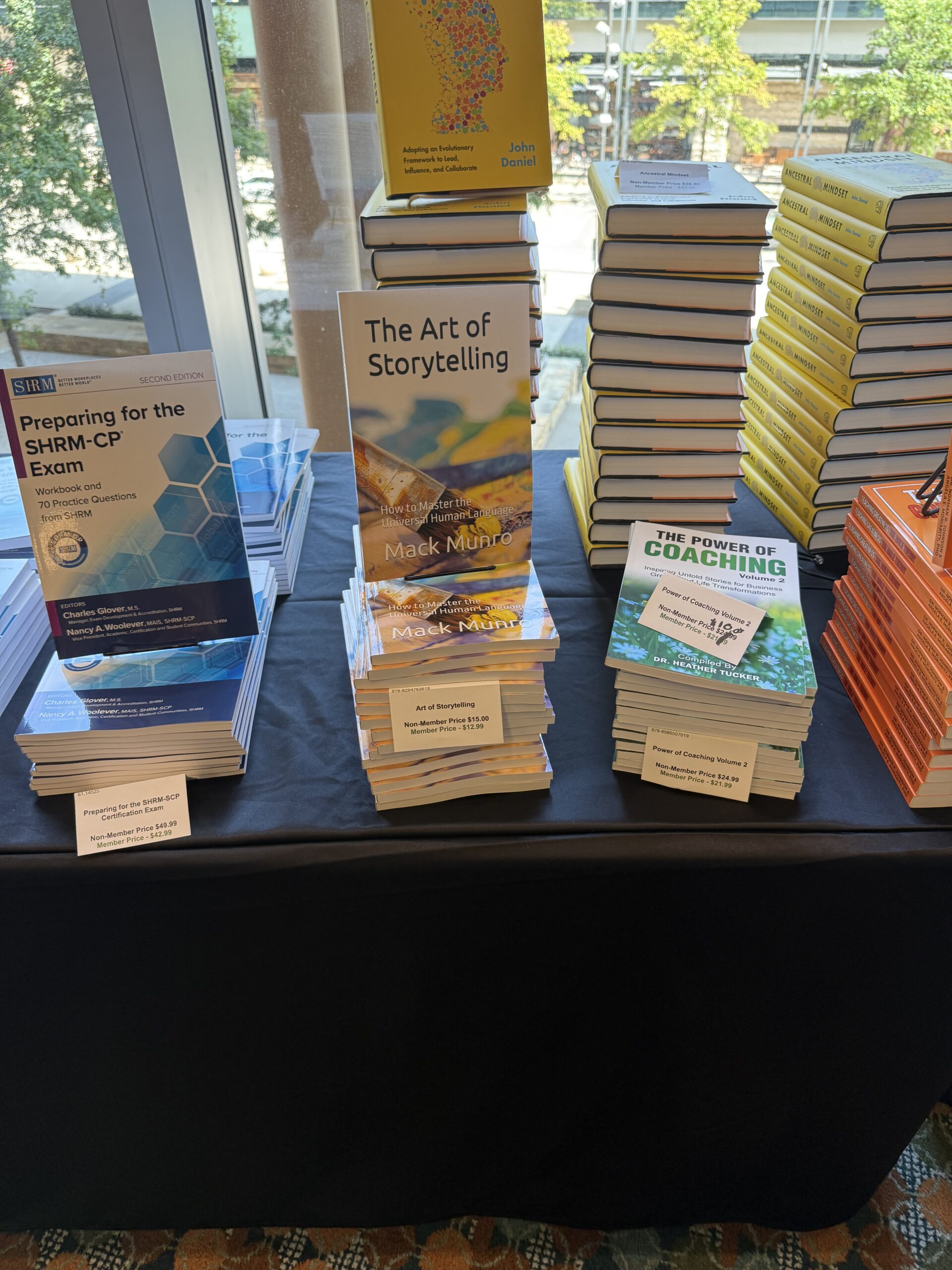
Yesterday, I delivered How to Improve HR’s Reputation Through Storytelling at the Tennessee State HR Conference in Nashville. With fifteen minutes left, I ran out of material.
And I didn’t panic.
I opened the floor for Q&A, thanked everyone, and wrapped up. Nobody complained. Nobody booed. A few people even came up afterward to chat. The rest bolted for snacks.
I felt great.
I think the trauma’s gone. Fitting, considering my days as a road warrior presenter are probably winding down. If this was my last big presentation, I’m glad I finally faced my fear—and found it wasn’t scary at all.
What fear is holding you hostage? And what are you willing to do to break free?